
Lewisville City Directory Collections
Lewisville directory research is spread across local shelves and regional repositories, not one complete online run. The strongest starting point is the Lewisville Public Library Local History & Genealogy Collection. On the second floor, it holds historical directories, local books, oral histories, newspapers, and Denton County material. Many items are reference-only, so an item’s format matters: a scan can be searched at home, while a microfilm reel or bound volume may require an in-person visit.
| Lewisville collection | Date marker | Repository | Access route |
|---|---|---|---|
| Local city-directory holdings | Years not published title by title | Lewisville Public Library | Second-floor local-history collection; reference rules may apply |
| Dallas City Directory, John F. Worley Directory Co. | 1956 page 931; other Portal pages include 1957 material | Portal to Texas History | Digital page image and OCR |
| HeritageQuest directories, maps, census and primary sources | Collection access, not a verified Lewisville run | Lewisville Public Library research resources | Library-card access rules apply |
| Denton people/place, deed and poll-tax material | County records include deeds from 1854–1855 and 1875–1902; poll tax 1938–1947 | Research Room and TSLAC routes | In person, microfilm, or catalog/depository access |
The Lewisville library confirms the city-directory holdings but does not publish a complete title-by-title run or a verified reverse-directory run. That Lewisville gap is useful information. Treat an unlisted year as unconfirmed until staff, a catalog record, or the volume itself establishes it.
Lewisville Local-History Shelf
The Lewisville library provides the local handoff when a name cannot be resolved from a scan. Genealogy assistance is available through Adult Services at 972-219-3570, option 3. Its Lewisville research resources include HeritageHub, HeritageQuest, Texas history and newspaper resources, Texas Digital Sanborn Maps, and the Portal to Texas History. Some databases require a library card, and access rules can differ between a home connection and the building.
Lewisville newspapers help place a directory listing in time. The local collection includes Lewisville Enterprise material from 1905–1941, 1945–1948, and 1952–1960, plus Lewisville Leader runs from 1961–2006 with 2001 missing, CD coverage from August 2007–2013, and later print/back issues. The Lewisville Digital Media Lab has a microfilm scanner, and printing is listed at $0.15 per page. Search the exact surname, a variant spelling, and the street or route separately before treating a newspaper hit as a match.
Lewisville City Directory Scans
The Portal to Texas History’s 1956 Dallas City Directory page 931 is a concrete Lewisville-area example. It identifies John F. Worley Directory Co. and includes route and box lines ending in “Lewisville Tex.” The portal’s OCR is a finding aid, not a transcription authority. Check the page image for initials, punctuation, spacing, and abbreviated street forms before copying an entry into notes.
The scanned page preserves the context that OCR can miss. It is a Dallas directory with Lewisville-area material, not evidence of a complete standalone Lewisville city-directory run or a full Lewisville household list.
HeritageQuest is the Lewisville library’s documented route to digitized directories, maps, census material, and primary sources. A catalog hit for Polk’s Denton City Directory 1966 was visible during research, but the exact digitized item or local holding was not located. Keep that title as a lead only, rather than extending it into a claimed Lewisville run.
Reading Lewisville City Directory Entries
A Lewisville directory entry should be read one field at a time. The 1956 Portal example can show a printed name, spouse in parentheses, historical occupation or business affiliation, a phone, a route or box, and the notation h or r. Those Lewisville details describe what the published entry recorded on that date. They do not establish a present address, a current family connection, or a complete household.
| Printed name | Copy initials and punctuation as printed, then note spelling variants separately. |
|---|---|
| Spouse or household clue | Parentheses may identify a spouse; retain the punctuation because it is part of the entry. |
| Historical occupation | A business or occupation can distinguish two people with the same name, but it is dated identity context. |
| Address, route, or box | Record the exact street form or rural-route line, not a modernized version. |
| Home or residence mark | h means home and r means room/residence in the available Portal example; do not treat them as interchangeable. |
| Owner or renter mark | No owner or renter mark was documented for the available 1956 page. Do not infer one from the address alone. |
- Criss-cross directory
- A section arranged by street and number rather than surname. Lewisville’s official collection guide does not publish a verified run.
- Householder index
- An index that points to a household head or address. Whether a given volume has one must be checked in that volume.
- Abbreviation key
- The publisher’s explanation of its marks. Photograph or transcribe the key before interpreting a listing.
Lewisville City Directory Newspaper Gaps
When consecutive Lewisville directories are absent, date-specific newspaper material is a better bridge than guessing that a family remained in place. The library lists Denton Record-Chronicle microfilm for 1909–1910; Lewisville News from August 1980 through March 2001; and Lewisville Times from 1973 through June 1980. Cardholder NewsBank access has separate text and image coverage dates for regional newspapers and the Lewisville Leader.
Search a Lewisville name with an address, route, subdivision, or family name. A notice can preserve a move, anniversary, organization, property sale, obituary, or civic event. It can also refer to an old address or a business location. Save the Lewisville issue date, page, paper title, and whether the result came from OCR, a scan, microfilm, or print. Note: A dated newspaper mention supports a dated event, not an unbroken residence claim.
Lewisville Directory Oral Histories
The library’s late-1990s Lewisville Oral History Collection provides resident and family narratives, with some photographs. It adds memory and place context that a dated directory normally lacks. Pair a directory line with an oral-history item only when the names, period, and place make the connection plausible, and identify the source type separately in notes.
Lewisville oral histories can explain a family move, a neighborhood name, or a remembered local event. They cannot convert a historical listing into a present roster. The Lewisville library also places genealogy books in Adult Nonfiction 929s. It does not hold local school yearbooks or annuals, so a yearbook question belongs with the school or district rather than an inferred library collection.
Lewisville City Directory Research Room
For an early Lewisville or Denton County name that does not appear online, the Denton County Research Room is the documented in-person fallback. It holds non-circulating early people/place materials, special collections, local-history guides, and a continuing Historical Commission record of cemeteries and burials. The Research Room is on the first floor of the Courthouse-on-the-Square, 1 Courthouse Drive in Denton. Appointments are recommended for extended or special-collection work, and material is not pulled in the final half-hour.
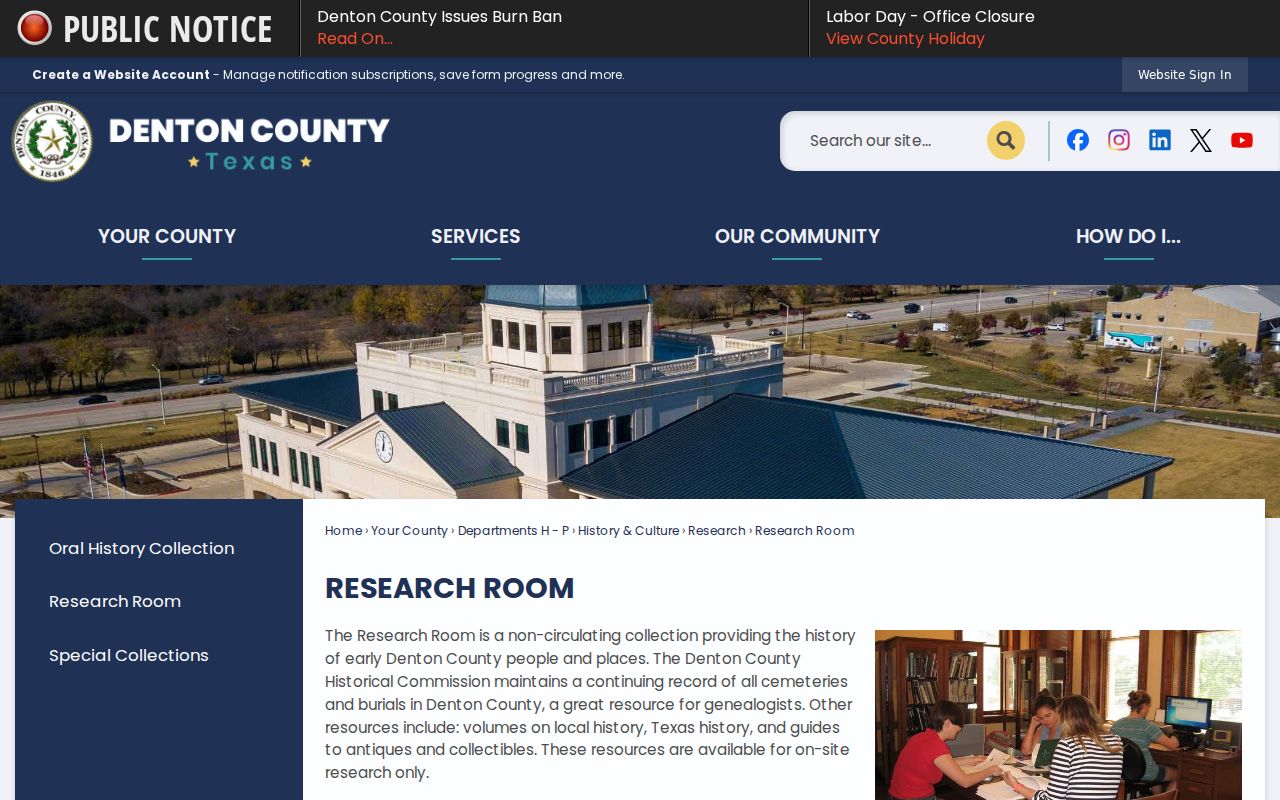
The room’s early people/place material is a fallback for a missing Lewisville local volume or obituary lead, not proof that it holds every Lewisville directory.
The TSLAC Denton County microfilm guide supplies the deeper Lewisville-area county records layer: deed records, direct and reverse indexes, marriage, probate, civil minutes, naturalization, tax rolls, and poll-tax records. It documents deed material from 1854–1855 and 1875–1902, with missing or unfilmed-volume cautions. These reels supply county context around a Lewisville person or property trail, not a promised directory title list.
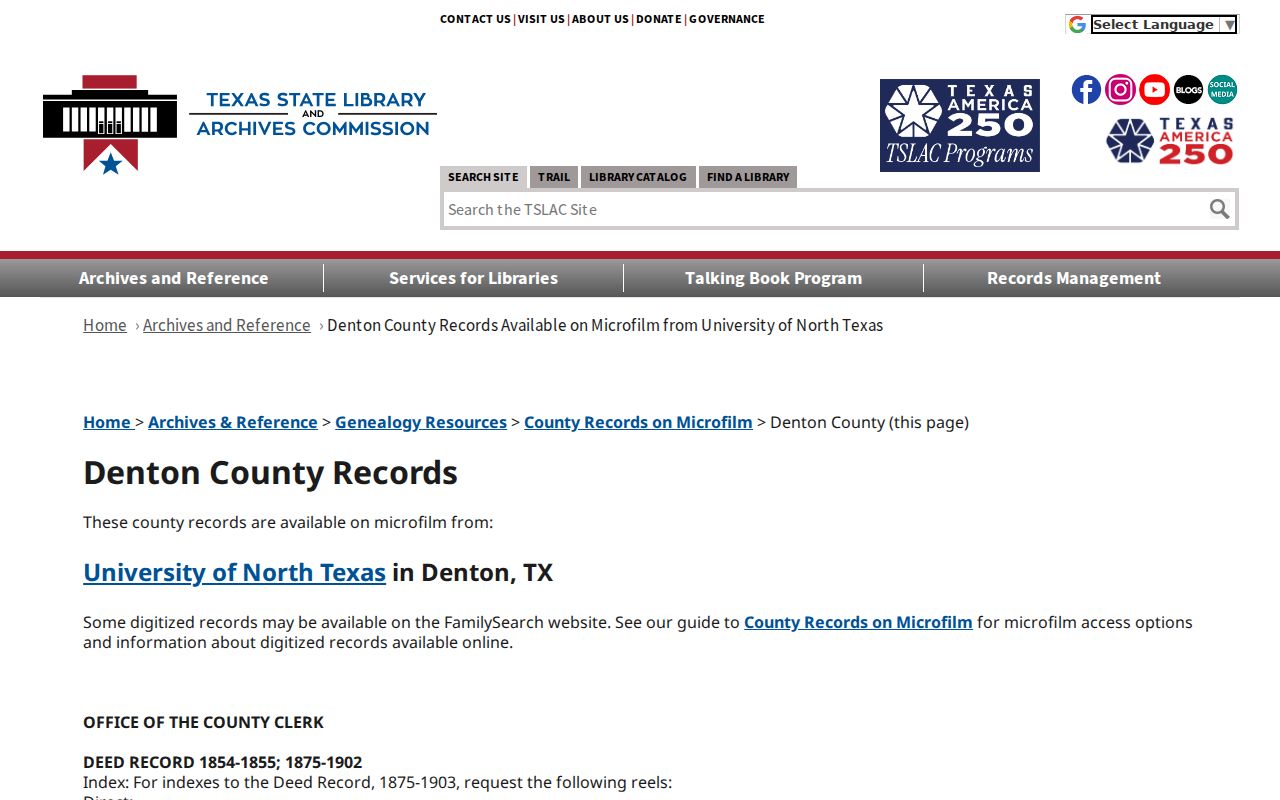
The TSLAC guide makes gaps visible, including a missing volume 61 and volumes 75 and 78 that were not filmed because entries extended past the cutoff.
Tracing Lewisville City Directory Households
Follow a Lewisville household through the directories as a sequence of dated observations. A first appearance can be a useful starting point, but an absence may mean a spelling change, a route listing, a different publication, a move, or an unlisted household. Pair each listing with an independent source before making a Lewisville family-history conclusion. For an address-first current parcel trail, use the Lewisville by-street directory after the historical research is stabilized.
- Find the earliest confirmed printed name, then save the title, publisher, year, page, scan link or shelf location, and exact text.
- Search the next available city-directory date for the same surname, initials, spouse notation, address form, route, or box.
- Record each change without correcting it. A shifted initial, street abbreviation, or route can be the clue that points to a second source.
- Pair directory years with the relevant census period, deed/legal-description trail, newspaper issue, or historical map.
- For a final absence, test an obituary or cemetery lead through HeritageHub, the library, or the Denton County Research Room.
A strong Lewisville household trail identifies the source type beside each statement: directory listing, scanned page, newspaper notice, map, deed, cemetery record, or oral-history narrative. A weak Lewisville trail has only a name match or OCR snippet. Keep “lead” and “confirmed” as distinct conclusions.
Lewisville Directory Proof Steps
Lewisville directory evidence becomes more useful when it is checked against a record that answers a different question. A deed identifies a recorded transaction, a current parcel record gives appraisal and situs fields, a newspaper gives a dated account, and a map gives Lewisville location context. None alone proves that every person named was living at a given location on another date.
For historic Lewisville street forms, compare the printed address with the legal description, a 1912 Sanborn sheet, or a TSLAC map before assuming the same number means the same place. No official Lewisville street-renumbering schedule was located. Preserve a Lewisville uncertainty rather than assigning a change date from one mismatch. Note: Record the custodian, source date, access mode, and the exact field or page that supports every household statement.
Lewisville Records Across Repositories
Lewisville’s historical trail passes from library shelf to county room to state archive. The Lewisville library preserves local print, newspapers, oral histories, photographs, and genealogy resources. The Research Room supplies early people/place and cemetery context. TSLAC preserves Lewisville reels and maps, while the Portal provides inspectable Lewisville scans. This division of work is why a missing online hit should lead to a better repository choice, not a broader name search.
A dated directory remains a lead, never a current roster. Keep the original date visible, inspect the underlying image, and ask the custodian for a copy or access route when the fact matters. That careful chain preserves both the useful detail and the limits of Lewisville’s historical collections.